
In a Facebook post, a local potter was curb alerting some clay. Free to claim, sitting out on the curb, exposed to the elements. I decided to check it out. It was a deep red and COMPLETELY dried out, but otherwise pristine in it’s orginal wrapping and cube shape from some clay company. NO identifying information as to what it was. I took it.
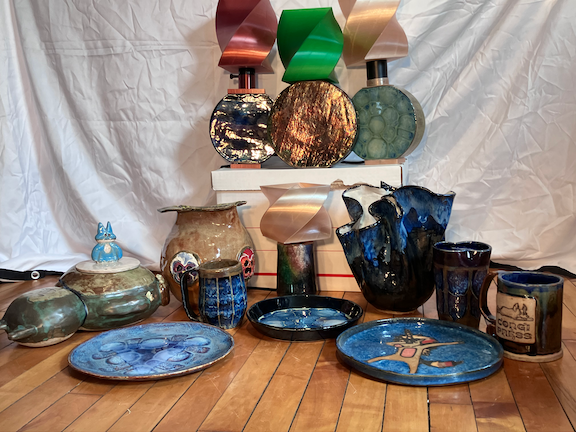
Oh this stuff was a nightmare. Mainly because I was too new to pottery, I didn’t know it’s safe firing temperature, and it’s deep rust color got everywhere. I had to keep it isolated from studio clay, because I couldn’t contaminate the reclaim with non stoneware. I had to protect the slab roller and any work surface or it would be stained red and very hard to clean. It had strange properties. Too groggy for throwing, but that was fine, I hand build, and this made for strong slabs to work with. It dried FAST so several projects went unfinished as it went from pliable to solid on me, without a leathery stage. It took careful storage to keep it soft, and was crazy hard to rehydrate. I had to make my own slip from it, something I’d never done. I got it TOO wet during rehydration, so I got to learn how to reclaim wet clay on plaster. The studio was gracious enough to do test firings to figure out its temp. It wasn’t really test firings, It was a sample inside a bisqued bowl to protect the kiln if it melted, added to regular firings. I eventually found it can handle cone 10, but I’ve mostly used it at cone 6, and Raku.
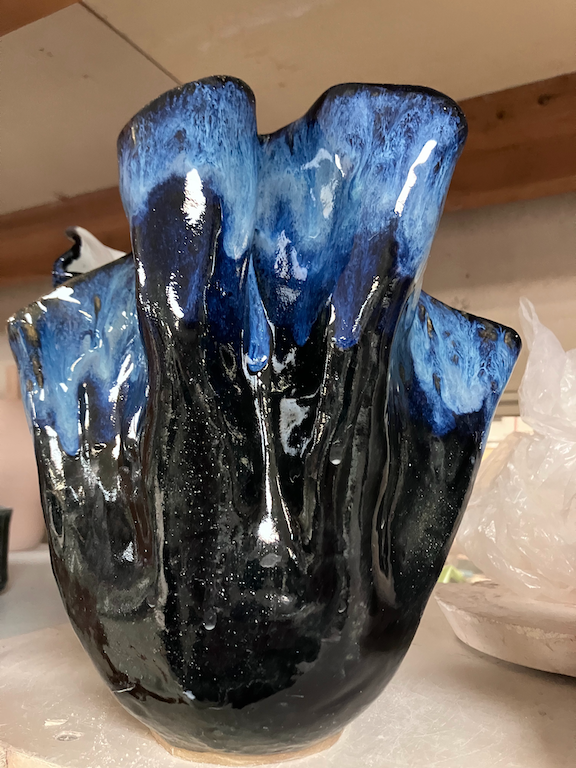
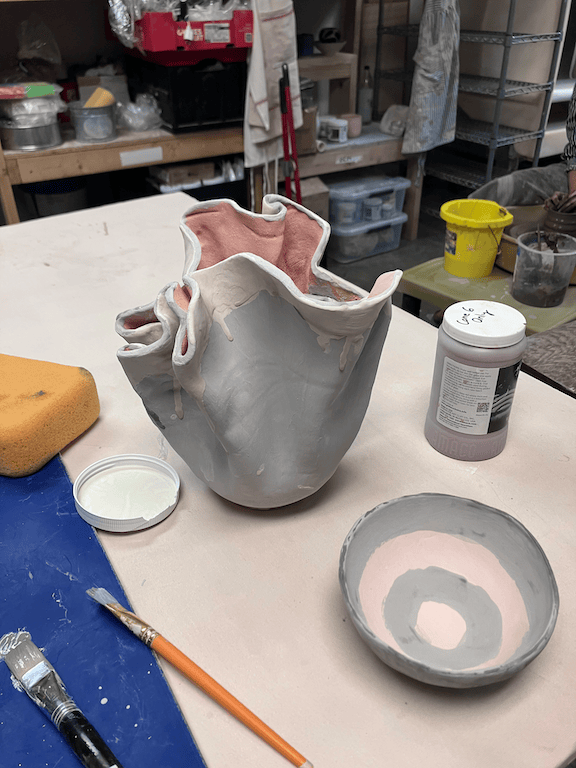
At one point I was trying to make a deep cylinder vase by draping a slab over a capped tube. I formed it nicely and went to take the tube out, and couldn’t get it out. I’d corn starched the tube, but this clay sucked that up and still stuck. So I tried to pry the tube out and the clay dried so fast that that creases and folds were too dry to do much with after I made them. Left with with a misshapen mess, I decided to lean into the chaos. I couldn’t smooth it back into shape, but I could slowly pull it out. So I made this wavy vase. Despite my caution, one side broke into pieces. When its that dry, reattaching is risky as its uneven drying, but I did it it anyway. It looked fun and people liked it and thought I did the shape on purpose.
There was another breaking incident in the same area once it dried completely. It was a completely different break, but in the same location. Fixing it was even more risky now because it’s dry and in a damaged area. I did it anyways. I must have pleased the Kiln gods somehow, because despite everyone’s belief it would fail – it survived the bisque. But it did have cracks. I used some bisque glue i’d picked up and never used before. Then went ahead and glazed it. The glued areas resisted the glaze, but they were on the inside and bottom. Not places that would be easily seen.
I went with big bold heavy drippy glazing style, lots of brushed on layers with glaze that was for dipping not brushing. Exactly what you shouldn’t do. I had nothing to lose on a vase that likely wouldn’t survive the kiln. I made my own giant cookie to put under it, and with trepidation and only surrounded by own mugs, the studio fired it.
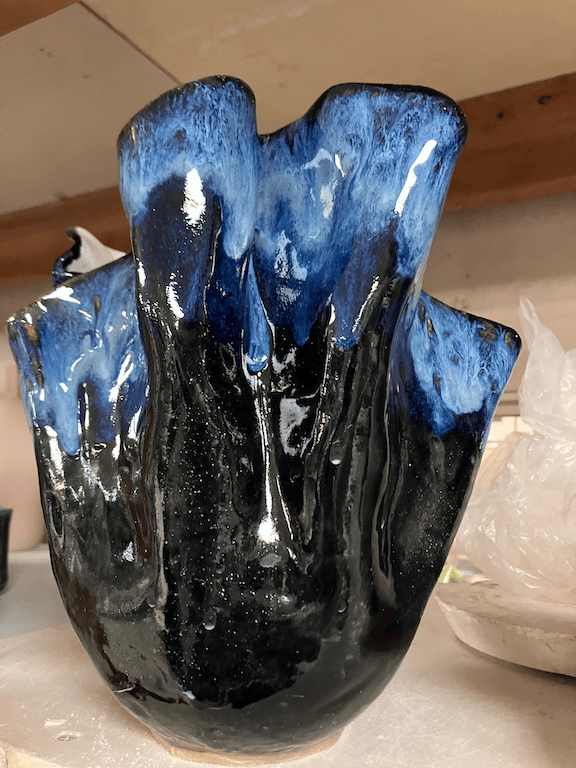
It did survive. No cracks, the glue held. The glaze was deep, shiny and hypnotic. This is the vase that should not be, and it became a show piece. Sometimes it pays of to F$$k around and Find Out.
But If I knew now what i did then, I’d have left that clay on the curb.